Cashless payments have become an everyday part of shopping and services across the world. Customers increasingly prefer to pay using a card, smartphone, or digital wallet instead of cash. For businesses, this shift has made payment terminals one of the most important tools for accepting payments quickly and conveniently.
The role of payment terminals in modern commerce
A payment terminal is a device that allows merchants to accept electronic payments from customers. When a customer taps, inserts, or swipes their card, the terminal securely transmits the payment information through banking networks for authorization. Within a few seconds, the transaction is either approved or declined.
Because the process is fast and automated, businesses can serve customers more efficiently while reducing the need to handle physical cash.
Different types of payment terminals
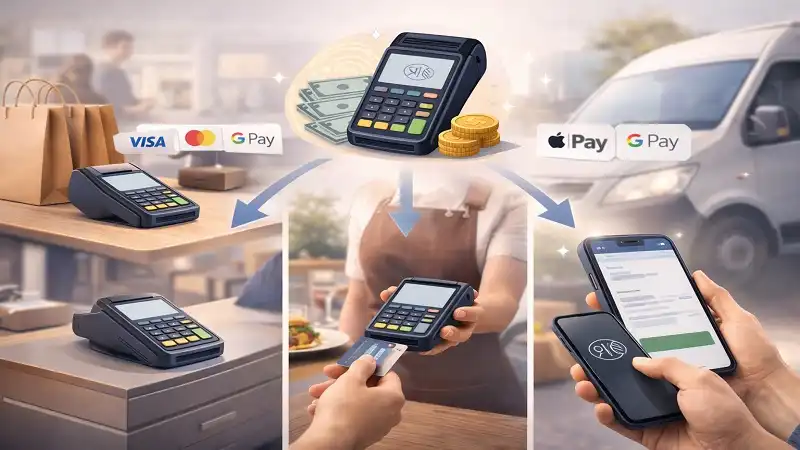
Today’s payment terminals are available in several formats designed for different business environments.
Fixed countertop terminals are typically used in retail stores where payments are processed at a dedicated checkout point. These devices are connected to the internet through a cable or Wi-Fi and remain permanently at the cash register.
Portable terminals are commonly used in restaurants and cafés. Staff can bring the device directly to the customer’s table, making the payment process more comfortable and convenient.
Mobile terminals provide the greatest flexibility. They are often used by delivery services, taxis, and professionals who work directly at the customer’s location.
Supporting contactless and digital payments
Modern terminals support a wide variety of payment technologies. Customers can pay using contactless cards, chip cards, or mobile wallets such as Apple Pay and Google Pay. This flexibility allows businesses to serve customers who prefer different payment methods.
Contactless payments in particular have become extremely popular because they are both fast and easy to use. In many cases, the entire payment process takes only a few seconds.
Benefits for businesses
Accepting card payments can improve both customer satisfaction and operational efficiency. Customers often prefer the convenience of paying electronically, especially when they do not carry cash.
Payment terminals can also help businesses maintain clearer transaction records because every payment is automatically recorded in the system. This can simplify accounting and financial management.
Choosing the right terminal solution
Before selecting a payment solution, businesses usually compare several factors such as transaction fees, hardware type, and available features. The best option often depends on the size of the business, the number of transactions, and where payments typically take place.
Companies that want to learn more about available options can explore solutions such as payment terminals designed for modern businesses, which include different terminal types suited for retail stores, restaurants, and mobile services.
A key technology for the future of payments
As digital payments continue to expand, payment terminals remain a critical part of the payment ecosystem. They allow businesses to adapt to changing customer preferences while offering a simple and secure way to complete transactions.
For many companies, investing in a payment terminal is not just about technology—it is about providing customers with the payment experience they expect in today’s digital economy.