
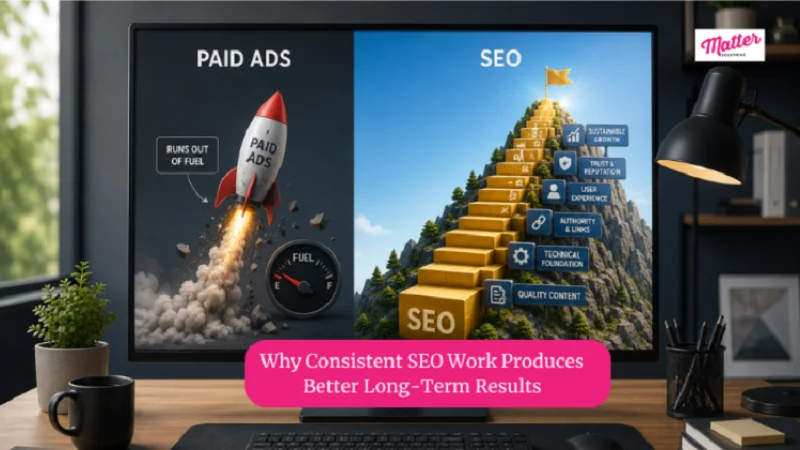
Consistent SEO work produces better long-term results because search engines reward steady effort over time. Google, in particular, tracks patterns like regular content updates and ongoing technical improvements. So sites that consistently improve tend to climb higher in search results.
That’s the approach we’ve followed for more than 25 years at Matter Solutions, helping businesses grow through SEO, Google Ads, and web design.
Now, while Google Ads can place you at the top of search engine results pages right away, your ads disappear the moment your budget runs out. Organic search works differently because a well-optimized page can keep ranking for months after you publish it.
In this article, we’ll dig deeper into why consistent SEO outperforms short bursts, what supports sustainable website rankings, and the practical steps behind long-term growth.
How an Effective SEO Strategy Builds Organic Traffic Growth Over Time
An effective SEO strategy builds organic traffic growth through small, repeated improvements rather than one-time fixes. And each update to your site strengthens how search engines discover and rank your web pages.
The tips below show you exactly where to focus your SEO efforts for the best return.
How Google Search Evaluates Your Website
Google search discovers your web pages through three steps: crawling, indexing, and ranking.
First, web crawlers follow links across your site to find new or updated content. Once they find a page, Google analyzes it for relevance and quality. If it passes, the page gets added to search results.
And that process never really stops. Google regularly updates its algorithm, and search results change as new content and competitors appear. If you don’t keep your website up to date, your pages can gradually lose visibility.
So your job is to consistently help search engines understand your content clearly. Things like structured data, clean internal and external links, and fast page speed all send the right signals to keep your pages visible.
Keyword Research and Content Strategy
Search intent changes over time, and your keyword research needs to keep up. This means a term that drove traffic six months ago might not match what users search for today.
For example, someone searching “best CRM software” in 2024 expected a comparison list. Today, that same search query may show AI-generated summaries instead. So reviewing your target search queries on a regular basis keeps your content strategy on track.
The goal here isn’t to publish random articles. You want a long-term content strategy built around real customer questions. High-quality content that directly answers those questions gives your pages a stronger chance at ranking.
On top of that, content optimization (like refreshing outdated stats or adding new sections) keeps older pages competitive in organic search results.
Measuring Progress with Google Search Console
Google Search Console gives you a direct look at how your site performs in Google search. It shows what’s working and what needs attention. These are four ways to get the most from it:
- Track Impressions and Clicks: Start by checking which pages show up in search results and how often users click through. If a page has high impressions but low clicks, your meta descriptions or title tags likely need work.
- Catch Declining Pages Early: Keep an eye on pages that are slowly losing search traffic. Because a page slipping from position 5 to position 15 is much easier to fix before it falls off page one entirely.
- Spot New Keyword Opportunities: You’ll probably find search queries you’re already ranking for but haven’t targeted with specific content yet. These are often quick opportunities to improve your rankings with dedicated pages or articles.
- Guide Ongoing Improvements: Pair your Search Console data with Google Analytics to see the full picture. Together, they help you refine your SEO strategy based on real user behavior over time.
As we mentioned, tracking SEO performance isn’t a one-time task. The businesses that grow organic website traffic year after year are the ones that review their data monthly and adjust based on what the numbers show. So you need to do the same.
How Stopping SEO Can Hurt Your Search Rankings
Most businesses stop their SEO work right when it starts gaining momentum. However, rankings need ongoing attention, and the companies that pull back too early often lose more ground than they realize.
Here’s where most of that lost ground comes from, and what you can do about it.
Technical Improvements That Protect Rankings
Technical SEO keeps your site visible to search engines. Without regular upkeep, even great content won’t reach the right people. Take a look at the areas worth checking regularly:
Website Performance and Page Speed
Google uses page loading speed as a ranking factor, which means slow pages hurt both user experience and your search engine rankings. Running regular speed tests helps you catch and fix these load time issues before they cost you visitors.
Crawlability and Indexing
For your content to rank, web crawlers need clean paths to find your web pages. But things like broken links, redirect chains, and missing sitemaps can all block search engines from accessing your content properly. That’s why you need a quick crawl audit every few months to keep everything accessible.
Technical SEO Maintenance
As your site grows, new pages and design changes can create problems like broken links, crawl errors, duplicate content, or slow-loading pages. Regular technical SEO audits help you identify and fix these issues before they hurt your search rankings.
Off-Page SEO Builds Authority Over Time
Off-page SEO is how your site earns trust from the rest of the web. The primary way this happens is through link building, where other websites link back to your content. Google treats those external links as votes of confidence for your site.
Now, your competitors earn new backlinks every month, and older links can break or lose value along the way. So consistent effort with quality external links is what will keep your site competitive in organic search results over the long run.
The Hidden Cost of Pausing SEO
When businesses stop investing in SEO, the damage doesn’t show right away. Rankings typically hold steady for about one to two months. But after that grace period, the decline picks up speed. This is what usually happens:
- Competitors Keep Publishing: While your site sits idle, other businesses keep producing fresh, optimized pages. Over time, those newer pages push yours further down in search results.
- Rankings Gradually Slip: Google favors websites that stay active. Without regular updates, your search engine rankings can drop by several positions in just a few months. And once you lose a top-three spot, the traffic loss is steep.
- Content Becomes Outdated: Pages that were accurate a year ago might not match current search intent anymore. That mismatch signals to Google that you’re not maintaining your site, which gives competitors an opening.
- Broken Links Pile Up: As other websites update or remove their pages, the external links on your site can break. Those broken links create a poor experience for both visitors and search engines (and they tend to snowball the longer you leave them).
- Organic Traffic Falls: Traffic typically drops between 25% and 40% within five to eight months after SEO work stops. That’s a lot of potential customers you’ll never see.
- Visibility and Trust Weaken: All of the above lead to fewer people finding your business through search. And, unfortunately, the ones who do land on your site may not stick around if your pages look outdated or link to broken resources.
Rebuilding lost SEO momentum almost always costs more than maintaining it would have. So if your budget is tight, scaling back your SEO efforts will be a far smarter move than stopping entirely.
Why AI Search Makes Consistency Even More Important
AI-powered search is changing how people find answers. Platforms like Google’s AI Overviews, ChatGPT, and Perplexity now pull content directly from websites and present it without a traditional list of links. This shift introduced what’s called answer engine optimization, or AEO.
The sites that get cited in AI-generated answers tend to share a few common traits:
- Well-structured content
- Strong authority signals
- Recent updates
That means the same consistency that supports traditional SEO also increases your visibility across these newer platforms. And if you fall behind on content freshness, you’ll notice more than just lower Google rankings. It can make your site invisible in an entirely new category of search that more and more users rely on every day.
Build an SEO Strategy That Keeps Delivering Results
SEO doesn’t have a finish line. The businesses that see lasting organic traffic growth are the ones that treat it as an ongoing process, not a one-time project. That means staying consistent with keyword research, keeping your content strategy tied to customer needs, and running content optimization on older pages before they start to slip.
Off-page optimization works the same way. Building quality backlinks and growing your site’s authority take time, but they compound in your favor the longer you stay with them.
One more thing worth mentioning: don’t wait for a rankings drop to check your progress. Instead, review Google Search Console on a regular basis to catch issues early and adjust your SEO strategy while fixes are still simple. This is how your business can grow consistently.
If you want help putting a long-term plan together, Matter Solutions can help your business grow its search visibility. Reach out for a free strategy call.