
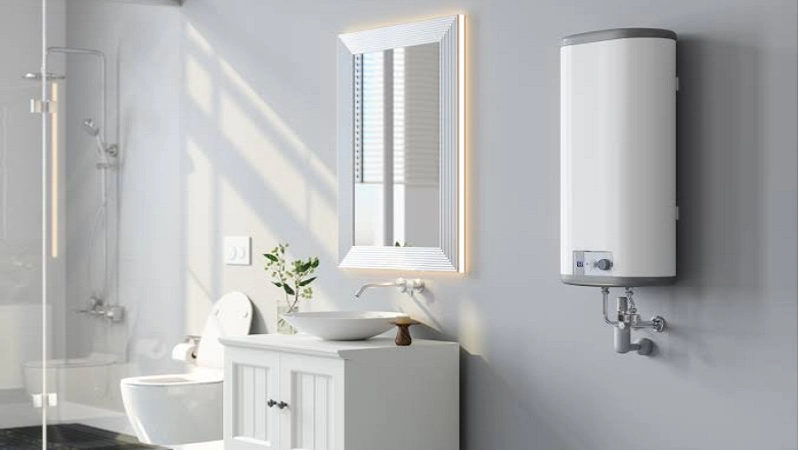
Selection of an Electric Geyser for your house begins with determining your household’s requirement for hot water. A suitable geyser model is one that can give you sufficient amounts of hot water while being efficient in terms of energy consumption and space utilization. Prior to making your purchase, consider such aspects as its capacity, efficiency, safety, and maintenance costs.
1. Understand Your Household Needs
Think first of how many individuals make use of hot water in a day. A smaller household might not require as much stored hot water as a bigger household where there are multiple people taking showers consecutively. Take into account the number of places in your home that will require hot water.
2. Choose Between Storage and Instant Models
Water storage heaters heat water in a storage tank and have it available for use. This may be appropriate where there is a continuous demand for bathing purposes. But once the water in the tank is consumed, then there is a wait for it to be reheated.
On-demand heaters heat water while flowing through the device. They occupy less space, and they may be used in the kitchen or a washroom with minimal demand for hot water. Efficiency depends on the heating capacity and flow of water.
3. Select the Right Capacity
The issue of capacity should be kept in mind while purchasing a storage heater. Too little capacity can lead to the situation where family members are forced to wait for hot water. If the capacity is too big, it will increase the cost as well as unnecessary expenses on heating the water that does not get used.
Think about the number of users, the duration of the bath time, and the frequency of the necessity to have hot water. Capacity should be compared in liters in the specifications. The capacity requirements stated by manufacturers should be used as a guide, but not as a strict rule.
4. Compare Energy Use and Running Costs
Costs of ownership go beyond the cost of purchase. The operating expenses are dependent on the wattage of the heater, the amount of time that the heater is in operation, your consumption in the home, and the electricity rates you pay.
Be sure to check out the wattage and energy specifications for the appliance on its label. A heater with more wattage is able to heat water fast but uses more energy when heating. Insulation, temperature settings, and the frequency of reheating of the water in the tank also determine energy consumption.
5. Check Safety Features
Safety should be considered since the nature of this machine is that of being water and electricity inclusive. Choose a machine with a reliable thermostat, safety from overheating and also the recommended pressure relief valve or safety valve. The tank and body of the water heater should suit the installation site.
Water heaters should be installed by qualified professional installers. Earthing, proper wiring, and circuit protection are vital. Extension cords should never be used and one should never play with the electrical connections of the machine. Follow the servicing instructions provided in the owner’s manual.
6. Measure the Installation Space
Before placing an order, you need to measure the place where your heater will be mounted. You should know the exact dimensions of the device and provide space for its pipelines and electricity wires. The model could fit into the space, yet not be appropriate because of lack of convenient access to it during maintenance.
Make the installer examine water pressure, pipelines, drainage, and the strength of the surface of installation. Wet spaces require special attention when installing any electrical appliances. Make sure the chosen model will suit your needs and conditions.
7. Review the Warranty and Build Quality
Look beyond appearance and price. Look into the warranty coverage and see what items it covers like the tank, heating element, and others. See if there is service coverage in your locality and if you need maintenance to keep the warranty in effect.
Also, compare materials used in the tank, protection from corrosion, insulation, and parts availability. Get your information from reviews but verify the specs from the seller. Make sure you retain the bill and warranty papers.
8. Set a Practical Budget
Think of how much money you can afford without having to do any comparisons. The cost for delivery, installation and wiring must be considered in your budget since prices depend on capacity, features, brand and availability. Hence, consult present listings instead of past estimations.
Avoid overspending on features that you will not use often. Instead, ensure that you buy an appropriate capacity, safety features, and that there is a warranty together with the service provided.
Conclusion
The selection of an ideal Electric Geyser depends upon the matching of capacity, energy use, safety and requirements of installation on the basis of your daily routine. If you are confused about electrical installation then study the specifications carefully and seek professional help. Evaluate the options available at Electromart before making your choice.