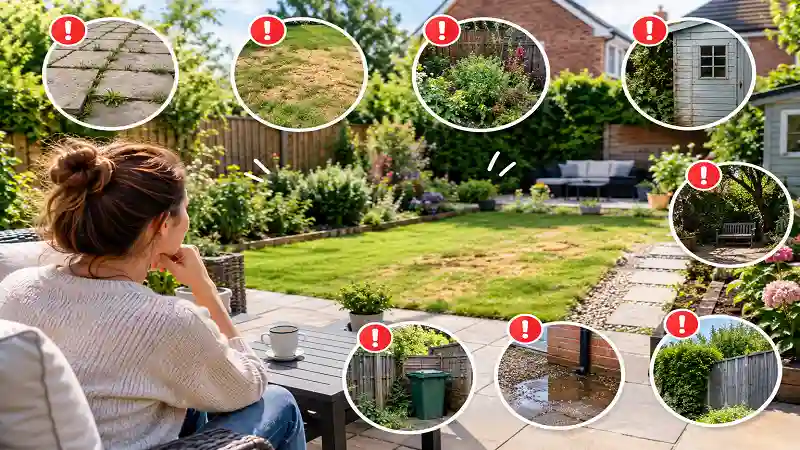
You bought the rattan furniture, strung up the fairy lights, and even invested in one of those fire pits you’ve used exactly once since last August. And yet, something about your garden still doesn’t feel right.
The problem usually isn’t what you’ve added. It’s the subtle layout choices you made and the flaws you accidentally left behind.
So, let’s walk through 10 design mistakes that ruin British gardens and how to sort them out before they cost you another wasted summer.
1. Poor Garden Layouts
You can fill your garden with gorgeous features and still end up with a space that feels awkward.
A pergola here, a raised bed there, and a water feature squeezed into the last available corner might sound like a good idea. But if none of it works together, you may quickly find yourself weaving around obstacles instead of enjoying the space.
You could end up with paths that lead nowhere useful, seating areas that face the wrong direction, and a beautiful planter that blocks the only route to the shed.
So, before you add anything new, sketch a rough layout and think about how you move through the space. A garden that flows well will always feel bigger and more inviting than one stuffed with features competing for attention.
2. Ignoring Sunlight Patterns
That dream patio you positioned against the back wall might spend most of the day sitting in the shadow of your own house. And the herb garden you tucked into the sunniest spot? It could be frying everything to a crisp by mid-July.
Most people skip the step of tracking how the sun moves across their gardens, and it shows. You end up with a seating area that gets 40 minutes of light before the neighbour’s extension blocks the rest.
To avoid this, spend a day watching where the sun falls, morning through evening, before you commit to anything permanent. Your plants will thrive, your guests will be more comfortable, and you’ll get to enjoy the sunshine when it finally makes an appearance.
3. Inadequate Drainage
Our weather has a talent for delivering three weeks’ worth of rain in a single afternoon. And if your garden has nowhere to send all that water, you’ll end up with a lawn that squelches underfoot for days and flower beds that smell like a swamp.
Excess water can also wash away topsoil, rot plant roots, and turn your lovely patio into a paddling pool nobody asked for.
If water regularly pools in the same spots, consider adding a French drain, working some grit into the soil, or regrading the area so water flows towards a border.
4. Oversized Plants
That shrub you picked up at the garden centre for £6.99 looked tiny when you brought it home. Fast forward three years, and it’s swallowed half the path and is making a strong bid for the kitchen window.
Not checking a plant’s mature size is one of the most common garden mistakes across the UK. It often leads to overcrowding, blocked light, and the kind of constant pruning that turns a relaxing hobby into a second job.
Want to avoid this? Always read the label, check the expected spread, and give everything enough room to grow without starting a turf war with its neighbours.
5. Limited Privacy
There’s nothing quite like settling into your garden chair with a cup of tea, only to lock eyes with someone in the upstairs window next door. If your outdoor space feels more like a stage than a retreat, you’re not going to use it as much as you should.
Privacy screening doesn’t have to mean a two-metre fence that turns your garden into a compound. Tall grasses, climbing plants on a trellis, or a well-placed tree can all create a sense of seclusion without blocking light.
Think about where the most exposed areas are and target those spots first. You’d be surprised how much difference a single strategically placed silver birch can make.
6. Insufficient Storage
Garden tools, bags of compost, half-used bottles of feed, and that inflatable pool the kids used twice all need somewhere to be stored. And if your garden doesn’t have an efficient storage solution, all of it will end up piled against the fence or shoved into a corner.
Just think about it. Even a beautifully designed garden can look neglected when there’s a wheelbarrow, three watering cans, and a tower of terracotta pots on permanent display.
Luckily, you don’t have to spend a fortune to fix this. A compact shed, a built-in bench with hidden storage, or even a weatherproof deck box can tidy things up without eating into your usable space.
7. Weak Lighting
Your garden shouldn’t turn into a dark cave the moment the sun sets.
Without decent lighting, that lovely space you spent all weekend perfecting becomes much harder to enjoy once the sun goes down. In peak summer, that might not be until 9 p.m., but by November, it can feel dark by 4 p.m.
Light up your pathways, and you’ll make it much easier to get around after dark. A few uplighters can show off your favourite trees and features, while warm string lights over your seating area will make those cooler autumn evenings far more inviting.
Solar-powered options have come a long way, too, so you don’t need to run cables or call an electrician to make a real difference out there.
8. Oversized Lawn Areas
A big stretch of grass might seem like the safe choice. But if most of it sits unused from October through March, you’ll be stuck maintaining a huge patch of greenery for very little reward.
Swapping some of that lawn for a patio, gravel borders, or wildflowers can give you a garden that works year-round. You’ll spend less time mowing and more time enjoying a space that actually suits how you live.
And if you’re not sure where to start, professionals offering tailored garden design services can assess your space and suggest changes that balance greenery with practical features.
9. Difficult Access
Narrow paths might look charming in a magazine, but wait until you try pushing a wheelbarrow down one while carrying a bag of mulch.
If you can’t comfortably walk through your own garden or, worse, if you’re sidestepping potted plants just to reach the bins, you need to rethink your layout.
Paths should ideally be wide enough for two people to walk side by side. And any steps or sudden changes in level need to be obvious and safe, especially when they get slick in the rain.
While you’re at it, keep the main routes clear of overhanging branches. You’ll be much more likely to keep up with weeding, watering, and pruning if getting to each area doesn’t feel like navigating an obstacle course.
10. One-Season Designs
A garden that peaks in June and spends the rest of the year looking like it’s given up on life is a missed opportunity. And in the UK, where summer generously lasts about six weeks, relying on a single burst of colour will leave you with 10 months of bare patches.
Mix in some evergreen structure, including hedges, ornamental grasses, and sculptural shrubs, to keep things interesting through winter. Then, layer on spring bulbs and summer perennials so there’s always something earning its spot.
A garden that looks good all year doesn’t have to be expensive. Even a handful of well-chosen plants can keep your outdoor space looking alive long after most of the summer flowers have faded.
Conclusion
Most of these problems are hard to clock. They don’t announce themselves the way a burst pipe or a dodgy boiler does, but once you spot them, they’ll become hard to unsee.
So, pick one, fix it, and see how different your garden feels. You might even find yourself voluntarily heading outside in February!